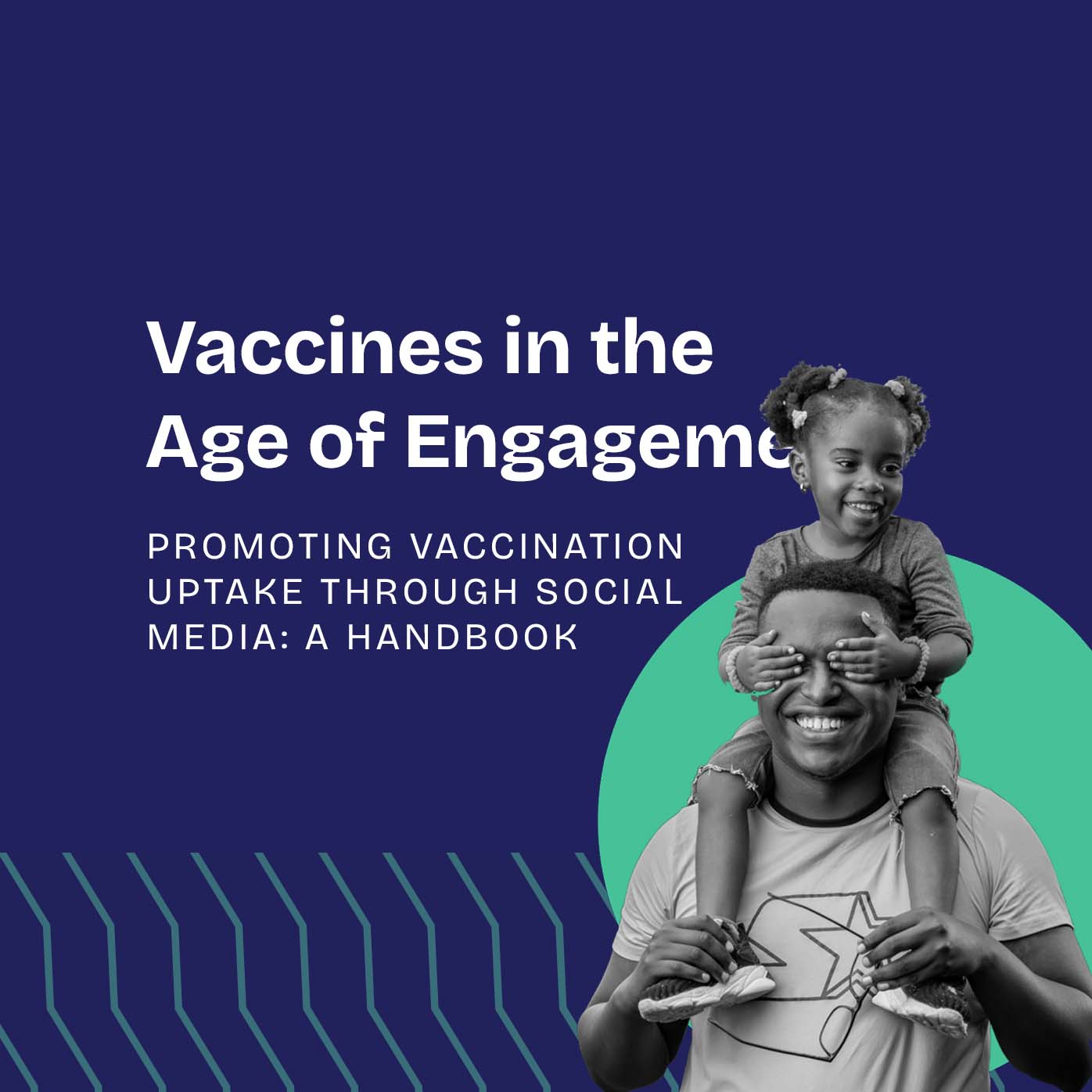

Vaccines in the Age of Engagement: Chapter 4
Vaccines are among the most effective and cost-efficient public health interventions ever developed, preventing an estimated 3.5-5 million deaths each year. Yet global routine immunisation coverage has experienced its steepest sustained decline in decades. Between 2019 and 2021, coverage for essential childhood vaccines fell sharply, leaving 25 million children without full immunisation – most of them living in low- and middle-income countries (LMICs).
A new report by BIT examines how behavioural science, social media, and digital tools can help address this challenge. Drawing on evidence from over 100 studies published between 2019 and 2025, alongside a new detailed case study from Nigeria, the report sets out what works – and what doesn’t – when designing behavioural vaccine demand strategies in resource-constrained settings.
While misinformation and hesitancy play a role, the report finds that in many low and middle-income countries, the biggest barriers to vaccination are practical and behavioural: forgetfulness, competing demands on caregivers’ time, weak reminders, and limited access to trusted information.
Behavioural strategies – particularly reminders, community engagement, and well-designed digital tools – can help bridge the gap between intention and action. Social media platforms and chatbots are emerging as powerful tools for vaccine demand generation, offering scale, personalisation, and real-time engagement. However, the report cautions that without careful design and safeguards, these same platforms can also amplify misinformation and mistrust.
Using insights from behavioural science and lessons from the VaxSocial Nigeria project – a collaboration between BIT and Nigerian social enterprise HelpMum – the report provides practical guidance for policymakers, funders, and implementers looking to design effective, responsible digital vaccine interventions.
The report combines a synthesis of global evidence with a hands-on handbook for designing, testing, and evaluating social media campaigns and chatbots in LMIC contexts. It aims to support governments, development partners, and implementers at a time when funding is tight, coverage is declining, and the need for cost-effective, scalable solutions is more urgent than ever. Such interventions can’t omit a careful focus on the demand side, as we argued in a blog earlier this year.
Key findings
- Behavioural barriers matter as much as access. Many caregivers intend to vaccinate but fail to follow through due to forgetfulness, friction costs, and competing priorities – not outright refusal.
- Reminders are among the most effective tools. SMS, voice calls, and planning prompts consistently improve vaccination uptake and timeliness, especially when combined with other support.
- Social and community strategies build trust. Trusted messengers, peer influence, and community engagement help shape norms and confidence around vaccination.
- Social media and chatbots can boost engagement – if used carefully. Behaviourally informed campaigns and conversational tools can address doubts and logistical barriers, particularly for the ‘persuadable middle’.
- Responsible design is essential. AI-enabled tools must include safeguards to prevent misinformation, bias, and over-reliance, and should complement – not replace – human health systems.
Vaccines in the Age of Engagement was produced by the Behavioural Insights Team in 2025, drawing on experience from more than 30 vaccination projects across a dozen countries (including work with UNICEF, WHO, Gavi, and national health authorities) and in particular our work on the VaxSocial programme — a $12 million initiative focused on demonstrating how social media can help build vaccine confidence, funded by Gavi the Vaccine Alliance and Advancing Health Online (AHO) – a fiscally sponsored project of Global Impact.
You May Also Like


VaxSocial Learning Seminar #4

M&C Saatchi World Services & Ipsos
VaxSocial Learning Seminar #3
M&C Saatchi World Services & Ipsos